
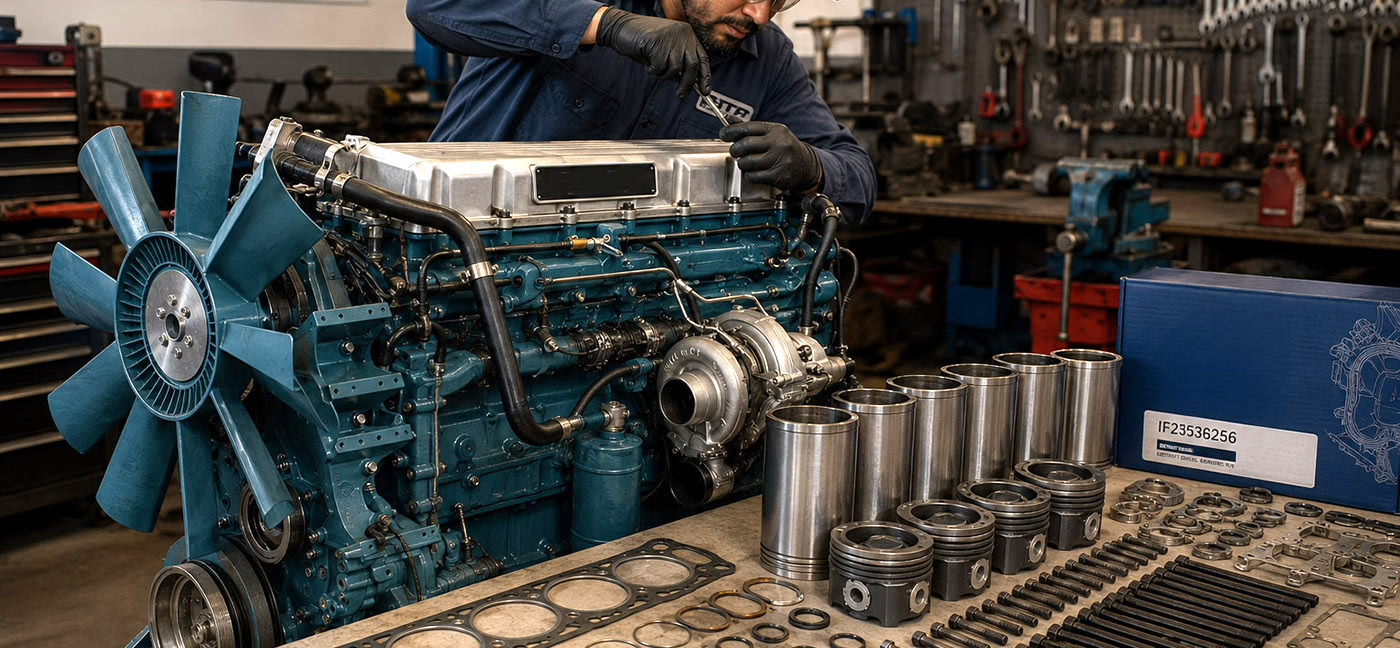
Detroit Diesel Series 60: A Deep Dive for Working with Rebuild Kits
The Detroit Diesel Series 60 was launched in 1987 as the first heavy-duty on-highway engine with full electronic controls (DDEC). Although it displaced only 12.7 liters initially, it matched or exceeded larger competitors in power while drastically improving fuel economy. By the early 1990s the Series 60 had become the backbone of Class 8 trucking in North America. It earned legendary status – ranking #2 on Diesel Power’s “best engine ever” list and being hailed as the most popular heavy-duty diesel engine in North America since 1992. Detroit Diesel extended the bore to 14.0L in later years to chase more horsepower, but all Series 60 models share the same stroke and modular design. Production continued through 2011, and parts remain plentiful today, making rebuilds common on trucks two decades old.
Series 60 Design & Variants
Detroit offered two main Series 60 displacements: 12.7L (introduced 1987) and 14.0L (early 2000s). The 14.0L version simply has a larger bore (5.24″ vs 5.12″) for more displacement – translating to higher peak power and torque. In practice, a 12.7L Series 60 typically made around 380–400 hp, while the 14.0L could be tuned to 425–515 hp at 1800 RPM. In return, the 12.7L generally returned slightly better fuel economy due to its smaller size. Both versions used the same block design, but critical parts (pistons, rings, liners, etc.) differ by displacement.
Always verify engine displacement and configuration before ordering rebuild parts. Buying a 12.7L kit for a 14.0L (or vice versa) is a costly mistake. Early and late models also differ by emission controls: post-2002 “DDEC VI” 14L engines added EGR, which complicates rebuilds (many shops recommend doing an EGR delete during rebuild).

Detroit originally designed the Series 60 for long life: initial overhaul was recommended at 500,000 miles, and later extended to 750,000-mile intervals after proving reliability. In fact, experienced rebuilders note that a solid block and rotating assembly can often yield “another 500,000+ miles” if rebuilt correctly. For truck fleets running regional or long-haul routes, rebuilding a Series 60 can be much more cost-effective than a full engine swap, thanks to still-available parts and experienced mechanics. The engine’s wet-cylinder liner design (no bored block) means every overhaul starts with pressing in new liners and installing standard-size pistons. This sleeve design is a key reason the Series 60 is so rebuildable – the cast-iron block itself is left intact, replacing only the wear surfaces.
Rebuild Kits & Components
When a Series 60 needs a refresh, an overhaul kit supplies virtually everything needed to restore sealing and bottom-end integrity. A complete in-frame overhaul kit for a Series 60 typically includes:
– Cylinder liners – since Series 60 blocks use wet sleeves, worn bores are replaced by new liners.
– Pistons and rings – standard-size pistons matched to the new liners (no oversize pistons exist for this engine).
– Main and rod bearings – new bearings (STD size) for all mains and rods to restore oil clearance and bottom-end longevity.
– Thrust washers – to control crankshaft end-play.
– Valve stem seals – to prevent oil from leaking past the guides into the combustion chamber.
– Complete gasket set – including head gaskets (with injector O-rings), oil pan gasket, front/rear main seals, and all other engine gaskets.
– Camshaft bearings – new cam bearings (often included in full kits) for proper oil pressure.
One detail that rebuilders always stress: never cut corners on the head gaskets. The Series 60 is known for head gasket leaks at high mileage, so installing a high-quality head gasket set is a must. In practice, full kits from reputable suppliers include everything above. For example, Detroit Diesel’s own parts catalog shows the IF23536256 14.0L in-frame kit (one-piece piston engines) includes 6 cylinder kits (pistons + liners), 7 cam bearings, 6 connecting rod bolts, head gasket set (with injector O-rings), oil pan gasket, and head bolts – everything except the valve cover gasket. The IF23536256C variant adds the valve cover gasket. In short, an in-frame kit restores the top and bottom end except for the crank, rods, front cover, and turbo.
In-Frame vs. Out-of-Frame Overhaul
Rebuilds can be done either in-frame or out-of-frame. In-frame overhaul means the engine stays in the truck; technicians remove the heads and main caps to replace liners, pistons, bearings, etc., then reassemble on the spot. This is faster and avoids hauling the engine out of the chassis. Importantly, in-frame service retains the existing crankshaft, block deck, front housing and other components. An in-frame kit therefore omits parts like the front cover and crankshaft components, focusing on wear items.
Out-of-frame (complete overhaul) is more extensive: the entire engine is removed for a full teardown. The block and crank are disassembled, cleaned, magnafluxed, line-honed if needed, and every component is inspected. In an out-of-frame rebuild you would replace front cover, front/rear oil seals, all gaskets and O-rings (including cylinder head and rocker housing gaskets), and often cam seals and thrust washers – essentially every seal the engine has. Unless catastrophic damage is found, the original block and crankshaft can usually be re-used, but this allows machine-shop work like deck milling or crank grinding if necessary. In short, an out-of-frame overhaul is the most thorough way to rebuild a Series 60, but it requires much more labor and cost.
For many owner-operators, an in-frame rebuild is a practical balance: you replace the internal wear surfaces while avoiding heavy machining. Still, it’s wise to check the removed cylinder heads carefully for cracks or worn valve seats. A useful rule of thumb is to consider a full out-of-frame rebuild whenever signs of deeper damage appear – for example, if a spun bearing or broken piston caused block distress.
Fitment & Common Rebuild Mistakes
Verify engine details before buying kits. The most expensive mistake is ordering the wrong kit. As noted, 12.7L and 14.0L Series 60 parts do not interchange. Likewise, “pre-emissions” (pre-DDEC VI) and DDEC VI engines have different intake manifolds, oil pumps and EGR plumbing. Always confirm your engine’s serial number, model year or part number cross-reference to ensure fit. For example, the AFA IF23536256 in-frame kit is specifically for 14.0L one-piece-piston Series 60 engines (no valve cover gasket) – it will not fit the 12.7L or 11.1L models.
Don’t skimp on quality. Cheap rebuild kits are a false economy. Some DIYers make the mistake of buying the lowest-priced kit and then suffering reliability problems. A leading rebuild shop warns that not all aftermarket parts are created equal – they trust only known brands like PAI, AFA and McBee, whose kits are “engineered to meet or exceed original spec”. In other words, use kits from reputable manufacturers that guarantee OEM-equivalent metallurgy and tolerances. For example, AFA’s premium kits feature friction-welded steel pistons, plasma-coated piston rings, bi/tri-metal bearings, and advanced multilayer gaskets for ultimate seal. PAI similarly emphasizes strict quality control: their 98,000 sq.ft. U.S. plant is ISO‑9001 certified, and they “commit to compliance” with all OEM specs.
Watch for known issues. High-mileage Series 60 engines often exhibit certain problems. For example, pre-2002 blocks had a wrist pin defect in some pistons – the pin could crack and allow a piston to separate from the rod. During a rebuild of an old engine, inspect wrist pins and piston crowns carefully. Also check cam followers and valvetrain geometry; over 500K miles, valve seats may need to be refaced. Be prepared to replace any deteriorated accessories (water pump, thermostats, EGR cooler) while you’re already working on the engine. In short, a thorough rebuild replaces any component nearing failure.
Aftermarket Manufacturers
Two major suppliers of Series 60 rebuild parts are AFA Industries and PAI Industries. AFA was founded in 1987 in Michigan as a family-run company with worldwide distribution of engine overhaul kits. AFA continues to expand its product line and prides itself on dependable, high-quality kits. Their Series 60 kits (including IF23536256, IF23536256C, IF23536256P and IF23536256PC) use advanced components: high-strength friction-welded steel pistons, cross-hatched honed liners for better ring seal, plasma-coated piston rings, PVD tri-metal engine bearings, and multi-layer gaskets with rubber edge bonding for superior sealing. These features often meet or exceed the original Detroit Diesel standards.
PAI Industries was established 1973 and is another leading U.S. supplier of heavy-duty engine rebuild parts. PAI maintains a 98,000 sq.ft. manufacturing facility in Georgia with state-of-the-art machining and quality systems. They are ISO‑9001 certified and emphasize that all PAI parts are made to meet or exceed OEM quality. In fact, engine rebuilders report that PAI’s kits are explicitly designed to match original equipment specifications. Whether using AFA, PAI, or Detroit-sourced parts, the goal is always the same: use components that restore the engine to factory-like condition.
Maintenance and Rebuild Tips
A preventive maintenance mindset can greatly extend a Series 60’s life. Regular oil changes and cooling-system care help avoid overheating and bearing wear. Watching for early warning signs is key: burning oil (more than 1 qt/1000 mi), blue smoke at startup, or exhaust leaks around the EGR cooler can all signal that a rebuild is pending. In practice, common triggers to rebuild include heavy oil consumption, white or blue smoke, loss of power/fuel economy, rod knock, or excessive crankcase pressure (blow-by). If you experience several of these symptoms together, it’s time to plan a teardown.
When installing an overhaul kit, follow the prescribed procedure: line hone the mains, torque all bolts to spec (Detroit uses torque-to-yield head bolts), and reassemble carefully. Balance the rotating assembly if the engine will see heavy duty. Always replace all oil filters and fill with clean, correct-viscosity oil. After rebuild, it’s important to break in the engine correctly – moderate RPM, frequent oil changes early on.
General Truck Parts Expertise & Services
General Truck Parts’ technicians are experienced in Series 60 rebuilds. General Truck Parts is your source for genuine and aftermarket Series 60 parts, as well as full rebuild services. We stock a comprehensive range of engine kits and components: in-frame overhaul kits like the AFA IF23536256 in-frame kit, cylinder kits, bearings & seals, head gasket sets, oil pumps, injectors, and more. Our technicians know the Series 60 inside-out, and our new diesel engine repair shop in Chicago can handle anything from minor repairs to complete engine rebuilds. We carry kits from AFA, PAI, and other top brands, but can also work with OEM Detroit parts when required. Whether you’re doing a DIY rebuild or need a turnkey service, General Truck Parts offers the parts and the in-house expertise to do the job right. Contact us today for an estimate on your Series 60 rebuild project.
Recent Knowledge Base Articles

How Camshafts Work

How Allison Transmissions Work

Heavy-Duty Truck Steering Gears: From Mechanical Gearboxes to Modern Power Steering

Detroit Diesel Series 60 Engine
Heavy-Duty Hydraulic Pumps Explained

Eaton Fuller Roadranger Transmission Model Breakdown
Heavy-Duty Turbochargers Now Available from General Truck Parts

General Truck Parts Announces Master Distributor Partnership with AFA Industries to Expand Heavy-Duty Engine Solutions
Fabco: A Legacy in Heavy-Duty Drivelines and Transfer Cases
The Universal Joint: The Connecting Link of the Heavy-Duty Truck Driveline
Contact Us Today
Our Experts are available to answer your questions and help you with your needs.
We take pride in getting you your answers, parts, and assemblies fast.
 | 800-621-3914 |